3rd European Biblio/Poetry Therapy Conference

Conference Programme: Keynotes & Abstracts
The days start with Keynote Presentations and end with Plenaries, each lasting an hour and taking place in the Clagett Auditorium of the Cathedral Lodge. Please arrive early for registration, coffee/tea, pastries and conversation.
The Conference Sessions are all 90 mins and will take place in three locations: the Clagett Auditorium, the Community Studio, which is reached by a 4-minute walk at ground level, and the Common Room across the courtyard on the first floor (stairs and lifts). Each Session will have either 3 Presentations or 2 Workshops, curated and chaired to be in dialogue with each other so we respectfully ask you to remain in one Session for the full 90 minutes and not change rooms. All Workshops take place in the Common Room and you will be asked to sign up on Registration for those workshops, as numbers are limited.
Below you can find the abstracts of all presentations and workshops. 'A' stands for Auditorium; 'R' for Common Room; and 'S' for Community Studio. The Sessions are numbered 1 for Thursday morning; 2 for Thursday afternoon; 3 for Friday morning; 4 for Friday afternoon.
On the first floor of the Lodge, above the Clagett Auditorium (stairs and lift), the Kentish Barn serves as a space for refreshments, refuge, and recuperation.
The Poetry Exchange - Creative Space and Time Out
A two-day conference can be intense. We have included regular breaks in the programme for informal conversations or networking. Sometimes you may want to skip a formal session and enjoy quiet time, art and poetry. We have created a space in the Kentish Barn hosted by John Prebble and Alex McIntyre of The Poetry Exchange, a beautiful project that explores the idea of Poems as Friends. There will be plenty of poems and creative inspiration on offer, and you can chat or just be quiet, and enjoy the resources. This is also where you can leave your own promotional materials. John and Alex will be available during breaks and lunchtime too. We encourage everyone to have a look at the work of The Poetry Exchange. It is a rich resource.


Thursday, 10.00-11.00, Clagett Auditorium:
keynote speaker Neil Astley: 'Staying Alive: Help on the Road'
Neil Astley is an English publisher, editor and writer. He is best known as the founder of the poetry publishing house Bloodaxe Books, which he founded in 1978 after graduating from Newcastle University. He received an Eric Gregory Award for his poetry in 1982, and was given an honorary D.Litt by Newcastle University for his work with Bloodaxe in 1995. He has published two poetry collections and two novels, The End of My Tether (Flambard, 2002; Scribner, 2003), shortlisted for the Whitbread First Novel Award, and The Sheep Who Changed the World (Flambard, 2005), and over twenty anthologies, notably the Staying Alive series, and four collaborations with Pamela Robertson-Pearce, Soul Food (2007) and Soul Feast (2024), and the DVD-books In Person: 30 Poets (2008) and In Person: World Poets (2017). He is a Visiting Fellow at Newcastle University and a patron of Ledbury Poetry Festival (after many years as a trustee), and was made an Honorary Fellow of the Royal Society of Literature in 2018. Neil has been credited with revolutionising and democratising poetry publishing in Britain by his inclusiveness.

Thursday, 11.30-13.00, Clagett Auditorium A1: 'The Personal & the Political'
Session chair: Thor Magnus Tangerås
Mariana Casale (United Kingdom): Re-politicizing the Personal: Storying Small Acts of Resistance in Narrative Bibliotherapy.
Narrative bibliotherapy is a post-structuralist practice that seeks to help people alleviate suffering by re-discovering their own voice and reclaiming a sense of agency in the re-authoring of their own lives. It honours the ‘subjugated knowledges’ (Foucault, 1976): wisdoms and relationships, ‘small acts of living’ (Wade, 1997) - that people recruit into their preferred narratives as small acts of resistance against structural inequalities that are recognised as social determinants of mental health (WHO, 2014).Participants will be invited to deconstruct a small selection of literary texts, exoticizing the domestic (Bourdieu, 1988), to dismantle dominant narratives that may feel oppressive and unjust, inspiring and legitimising each reader’s re-authoring of their own lives. Acknowledging that the political within the personal (Hanisch, 1969), this in turn contributes to community building by reigniting hope in collective structural change.
Sue Spencer (United Kingdom): Way making and mapping the journey: reparation and restitution from moral injury through reading, writing and sharing poetry.
In this presentation I wish to explore how there are possibilities and potentialities for the role of poetry in facilitating moral repair, restoration of trust and development of connections and community. This is an invitation to consider how the poetry of witness as a political act has a long history and that poetry as a pedagogical tool has the potential to facilitate and establish moral imagination and help sustain connections and community. To illustrate and elaborate on my learning and insights I will share my own poems and the thoughts of poets that have moved me and, in their work, have sought to move something in the world with the condensation of language, use of metaphor and imagery that seek to disrupt dominant discourses.
Tamás Karáth (Hungary): Biblio/Poetry Therapy as an Experimental Model in University Literature Teaching.
This paper investigates the applicability of bibliotherapy-informed pedagogy in university literature teaching through an experimental design. In the spring of 2025, three first-year BA seminars of preservice EFL teachers at Comenius University, Bratislava participated in a six-session intervention using identicalpre-modern English literary texts but different teaching approaches: a literary-history-focused control group, a bibliotherapy-oriented group, and a mixed group integrating bibliotherapy with literary history. Empirical data were collected through a post-course questionnaire measuring perceived learning outcomes, skills development, and therapeutic effects (based on an adapted version of Lese and MacNair-Semands’s Therapeutic Factors Inventory).Quantitative analysis showed that while the control group achieved higher gains in literary terminology and historical context, bibliotherapy-oriented groups demonstrated stronger self-expression, motivation, and reflective engagement with texts. Overall therapeutic gains were comparable across groups, suggesting that bibliotherapy enhances affective and self-reflective dimensions without fully replacing cognitive instruction. The experimental teaching continues in 2026, whose outcome will be compared with earlier findings.


Thursday, 11.30-13.00, Common Room R1: 'Life's Journey' - workshops
Session chair: Jon Sayers
Julia McGuinness (United Kingdom): Mapping the Landscape of Challenging Journeys.
Whilst each individual journey is unique, there are commonalities in the landscape of the pilgrim path. Indeed, the key feature of a pathway is that other travellers have preceded us. Would it be possible to crystallise some key patterns common to difficult loss journeys albeit with differing circumstances? Through exploring existing models of transformational journeys from Joseph Campbell’s Hero’s Journey to Strobe and Schut’s Dual Process Grief Model, setting up discussion groups and observing my counselling clients, I found an eight-process shape emerging that has resonated with my own experience of tough times, as well as that of others. This template can be applied to journalling and poetry therapy as a guide to choosing material and writing activities that align with specific processes. This can enable a more vital connection to writing approaches to support people wherever they are along their particular journey.
Eyal Ivnitsky & Efrat Havusha Feldman (Israel): For Adults Only: The Hidden Mystery in Children Books.
This workshop offers participants both a conceptual and experiential understanding of how children’s literature can function as a meaningful therapeutic tool with adults. While children’s books are widely used in educational and developmental contexts, their specific role in therapeutic work with adults remains relatively underexplored and rarely addressed as a central focus in professional conferences. This workshop brings that perspective to the forefront. It expands the common perception of children’s books as simple or developmental material, and instead presents them as texts capable of accessing early emotional layers, symbolic processes, and non-linear forms of meaning-making. Participants will gain a new clinical perspective on familiar texts and practical tools for integrating children’s literature into their work. The session is particularly relevant for practitioners interested in deepening their work with symbolic language, imagination, and the emotional resonance of texts.


Thursday, 11.30-13.00, Community Studio S1: 'Libraries, Prisoners & Young People'
Session chair: Johanna Holopainen
Irene Monge (Italy): Beyond the Page: Adapting Bibliotherapeutic Approaches for Children aged 3–12.
Based on professional experience, this abstract explores the unique dynamics of bibliotherapy when applied to children compared to adults. While bibliotherapy serves as a bridge to emotional literacy, the methodology undergoes a significant shift when working with the 3–12 age group. In clinical and educational practice, the core differences emerge across three dimensions: stimulus questioning, objectives, and delivery. Unlike the introspective dialogue used with adults, children require concrete, imaginative stimulus questions that translate abstract feelings into relatable narratives. The objectives also shift from complex self-analysis toward foundational emotional regulation and social-emotional learning. Finally, the mode of achievement is distinct: for children, bibliotherapy is not purely conversational but inherently multisensory and playful. By integrating creative tools and active engagement, the practitioner facilitates a "safe distance" through the story, allowing the child to process reality through fiction. This nuanced approach ensures that bibliotherapeutic goals are met within the child’s specific developmental and cognitive framework.
Patricia Lucha Fariña (Ireland): At the intersection of Words, Sounds, and Well-being: Enhancing Digital Bibliotherapy for Children.
As the landscape of digital literacy evolves, the practice of reading is shifting from static pages to interactive, multisensorial modalities. This transition offers unique opportunities for immersive storytelling amplified through sound and music within web-based e-books using platforms like Twine. Exploring narratives through active text engagement has been shown to enhance readers’ well-being and psychological growth by facilitating self-reflection, meaning-making and emotional exploration. Focusing on the critical development window of children in early adolescence (ages 10 – 14)experience a deep developmental phase, this research explores the integration of sound and music as core mechanisms in constructing immersive narrative environments. By employing multimodal digital approaches, this study transforms traditional reading into an interactive narrative experience. Adopting gamification approach to the digital ecosystem, this research investigates how play-oriented engagement through sound and digital interaction allowing children to “play” with the text and influence story development aiming for an emotional reaction.
Güssün Güneş & Zeynep Topdemir (Turkey): Bibliotherapy Practices in Turkish Prison Libraries: Implications for Psychosocial Development and Social Reintegration.
This study presents a six-month bibliotherapy programme carried out at Maltepe Prison Library and examines how guided shared reading can support the psychosocial development, emotional literacy and reintegration into society of incarcerated individuals. Monthly thematic sessions, led by a librarian under the supervision of a psychologist, combine shared reading with structured group discussions. The psychosocial wellbeing and library engagement of participants, selected on a voluntary basis, are assessed using qualitative methods such as interviews and observation, while the potential effects on empathy, self-expression and reading motivation are monitored. The study makes three key contributions. Firstly, it repositions the prison library as a therapeutic and rehabilitative space. Secondly, it proposes a sustainable interdisciplinary model that brings together librarians and psychologists. Thirdly, it develops a transferable bibliotherapy workshop framework for prison settings.


Thursday, 14.00-15.30, Clagett Auditorium A2: 'Finding Meaning'
Session chair: Sue Spencer
Judit Béres (Hungary): Pilgrims in search of meaning and belonging: Existential focuses in biblio/poetry therapy.
Life is a constant search for belonging, for love and identity, and for places where we are accepted. A biblio/poetry therapy group offers a supportive community where people can encounter and reflect on their own issues. In recent years, due to collective crises, people have become more focused on significant existential issues concerning their relationship with death, loss, isolation, freedom, and meaninglessness. These issues make people aware of their own existence, encouraging them to clarify their relationship with fundamental questions and values, leading to personal growth and a more authentic life. Our biblio/poetry sessions may focus on these issues. This presentation aims to provide an introduction to this work by presenting some theme-appropriate reading and writing exercises, such as existential poetry and prose, nature writing, creative life-writing exercises etc.
Eva Selin (Sweden): The dream is a little hidden door.
By drawing on Carl Jung’s theories in a modern and accessible way, dreamwork can be an easily approachable form of biblio/poetry therapy. In a safe, low-threshold setting, you can use your nightly dreams as a powerful part of ongoing shadow work. This presentation explores dreamwork for the purpose of personal reflection in a private poetic dream journal. The presentation will introduce relevant parts of Jung’s basic theories regarding archetypes, symbols and metaphors. No prior knowledge is required.
Juhani Ihanus (Finland): Performance and ritual in biblio/poetry therapy.
In this presentation, I will explore the concept of biblio/poetry therapy as a performance stage where individuals can express, enact, and process meaningful choices and changes through dialogue. The presentation will also provide an example of how to incorporate performance and ritualistic/ceremonial elements into biblio/poetry therapy practices. Although biblio/poetry therapy is typically associated with therapeutic reading and writing, it can also function as a performance space. In this space, experiences, meanings, and interactions are expressed through words, spontaneous nonverbal expressions, and symbolic, ritualistic, or ceremonial acts. This can lead to profound shifts in consciousness and dialogical transformations of the self. Questioning established identities and acknowledging the resources inherent in language and performance, such as poetic metaphors and symbolism, can enhance the creative flow and lead to new, constructive insights for individuals, groups, and communities.


Thursday, 14.00-15.30, Common Room R2: 'Somatics and Embodied Practice' - workshops
Session chair: Charmaine Pollard
Anne Taylor (United Kingdom): Drawing poems in the air: Somatic writing for self-discovery.
This workshop will focus on our hands as a key to using our whole selves (mind and body) as a source of creativity and expression. It will explore the ways in which exploratory movement sequences, combined with awareness, can calm the central nervous system, challenge habitual ways of moving and thinking, engage our senses and inspire surprising metaphors and freedom in writing. Drawing on the thinking of Lakoff and Johnson, Iain McGilchrist, Bessel van der Kolk, Moshe Feldenkrais and others, the session will invite gentle, playful movements of the hands and fingers to inspire novel ways of moving and thinking and fresh conversations between ourselves and the page. The session will involve some gentle movement sequences in sitting, combined with expressive and reflective writing from prompts and poetry.
Holly Winter-Hughes (United Kingdom): Holding Space, Holding Breath: Silence, Spatiality and the Embodied Poem in Biblio/Poetry Therapy.
This workshop explores the interplay of silence, spatiality and embodiment in biblio/poetry therapy, examining how poems inhabit both the page and our bodies. We will consider how line breaks, enjambment, spacing and punctuation create pauses that invite reflection, and how breath and bodily presence shape both the reading and sharing of poetry. Participants will be invited to engage experientially with text, noticing how physical and metaphorical spaces influence the poem’s impact. The session highlights how poetic form, embodied presence and the environments we inhabit interact to create therapeutic resonance. Attendees will be encouraged to reflect on how these dynamics influence their own practice, fostering awareness of how silence, pause and spatiality enhance therapeutic engagement. The workshop aims to inspire practitioners to explore poems as living, shared and embodied experiences, expanding their sense of how text, body and space interrelate in biblio/poetry therapy.

Thursday, 14.00-15.30, Community Studio S2: 'Hope Beyond Grief'
Session chair: Milika Tembo
Claire Williamson (United Kingdom): Give Sorrow an Antidote?
Drawing on theory from Claire’s doctoral thesis, which explored grief narratives (Arthur W. Frank, 2005), this interactive presentation offers an opportunity to reflect on sorrow about losses of any kind. Informed by Pesso Boyden Therapy, we will create words that see and soothe these experiences, centered on meeting basic needs. There will be an opportunity to write and share words in a nurturing environment, and reflection time as a group.
Johanna Holopainen (Finland): The Use of Art Images in a Poetry Therapy Group for Cancer Survivors to Address Changes in Body Image and Sexuality.
Cancer affects body image and often sexuality. Art can be a successful medium for exploring these changes and the associated experiences. Tuiskuand Holi (2023) argues that through visual art, it is possible to access non-verbal emotional and bodily experiences and bring them into the realm of linguistic awareness. In this presentation will introduce of one session of a poetry therapy group for cancer survivors. Artwork was used as a mirror to reflect changes in body image and sexuality among cancer survivors. The session was designed according to a poetry/bibliotherapy structure, and the same content was implemented in four different groups. The session was part of a ten-session intervention aimed at addressing of the corporeality of cancer experiences through art-based methods and writing. Experiences were approached in two stages: first by reflected on one’s own experience through an artistic image, and then by written about it. Using close-reading method illustrates that the written accounts revealed that the changes in body image and sexuality caused by cancer were captured in detail. The method was found to be interesting and effective.
Thor Magnus Tangerås (Norway): «Poetic microdoses» - empirical investigation of the potential of poetry to increase attention and improve connectedness to nature.
Several studies have shown evidence that poetry may contribute to improved mental health and quality of life. However, there is currently an increasing attention deficit and a decline in reading. So how can we make people engage with poetry? I will present my current project called «Microdosing poetry», an empirical investigation of how a supply of small daily doses of poetry may bypass defences against reading and slowly increase attention and connectedness to nature. Drawing on neuropsychological research on the processing of poetic language I have created micro-poems utilising the classic techniques of alliteration and parallellism to create wonder, desautomation and synesthetic experiences. These experiences may provide generalised resistance resources against depression and anxiety. In this presentation I will combine the performing of these poems with discussing the results of an empirical experiment involving real readers and how these poems have impacted them.


Friday, 10.00-11.00, Clagett Auditorium:
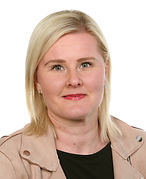
keynote speaker Mel Perry: 'Troughs & Rainbows: Lives Enhanced by Poetry'
Mel Perry is a poet, spoken word performer and therapeutic writing facilitator from Wales. She holds an MSc in Creative Writing for Therapeutic Purposes and has a background in public health and substance misuse. She is Chair of Lapidus International, the UK words and writing for wellbeing organisation, and co-director of write4word CIC. About her research she relates: 'All of the research that I have formally conducted has come from my practice and curiosity – as a manager, as a health promotion specialist and as a writing practitioner. Our work is rich and diverse in styles of working, in cultural influences, in the settings within which we work and in the issues of communities and individuals we address. As we reflect on our practice we can adapt in the moment and in future. We can use our skills in reflection to interrogate and improve our own individual practice, we can explore that with each other and share this more widely across our community.'

Friday, 11.30-13.00, Clagett Auditorium A3: 'Frameworks, Models & Approaches'
Session chair: Krisztina Suranyi-Cseko
Luca Buonaguidi (Italy): Psychology of Poetry: theoretical models and clinical developments, from the20th-century Masters to Neuroscience.
Psychology is born from Poetry. The great psychologists of the twentieth century knew this well and all discussed it extensively in their works. Through a systematic analysis of how the main psychological currents have interpreted the poetic phenomenon, we will explore the most important ones in the development not only of Biblio/Poetry Therapy but of psychology itself: from Freud's drive sublimation to the transcendent function of Jung and Hillman; from poetry as rêverie with the infinite object for Klein, Bion, and Winnicott, to Lacan's language of the unconscious and Assagioli's psychosynthesis. Not only psychoanalysis: we will also explore Gestalt, humanistic, and existential psychology, up to the poetic basis of cognitivism and poetry as a behavioral response. Today, the therapeutic value of writing is supported by neuroscience, starting from Pennebaker's experimental studies. An essential theoretical mapping for a conscious and integrated Biblio/Poetry Therapy practice, capable of uniting the rigor of the scientific method with the depth of poetic inspiration.
Tomomi Yamashita (Japan): Bibliotherapy and Narrative Identity: Toward a Narrative Resource Model of Identity Development.
Bibliotherapy has been discussed in relation to diverse theoretical frameworks, including psychodynamic approaches, reader-response theory, and cognitive behavioral therapy. While each offers valuable insights into emotional engagement, meaning-making, and cognitive change, they do not fully account for bibliotherapy as an umbrella term encompassing heterogeneous practices. In particular, existing frameworks provide limited explanation for how engagement with narrative texts contributes to the ongoing construction of identity. This presentation focuses on narrative forms of bibliotherapy and proposes a conceptual framework that integrates these perspectives through the concept of narrative resources. Drawing on narrative identity theory(McAdams & McLean, 2013), it argues that individuals construct their identities through evolving life stories. I suggest that literary texts provide narrative resources such as stories, characters, and narrative structures that readers draw upon in processes of interpretation, emotional engagement, and cognitive restructuring, and integrate into their life narratives over time. By introducing a Narrative Resource Model of identity development, this study offers an integrative account of how narrative engagement in bibliotherapy supports identity reflection and reconstruction.
Anikó Oroszlán (Hungary): Shakespeare in Bibliotherapy: Classical Drama, Self-Reflection, and Therapeutic Practice.
The use of dramatic texts in bibliotherapy remains relatively uncommon, as therapeutic work with drama is more frequently associated with dramatherapy and theatre therapy, which primarily employ enactment, role-play, and improvisation as their principal methods. Nevertheless, the works of canonical playwrights such as William Shakespeare offer rich possibilities for engaging with a wide range of existential and psychological themes. Shakespeare has a well-established tradition of therapeutic application, from the reader-response-oriented pedagogical practices of the Folger Method to the sensory drama games developed by Kelly Hunter for autistic children. An additional and particularly intriguing aspect of this tradition is the involvement of Shakespeare biofiction, such as Hamnet by Maggie O'Farrell (and its filmic adaptation by Chloé Zhao), which may itself be read as representing Hamlet as a therapeutic text and as a site of grief work and self-reflection. My paper explores the possibilities of employing Shakespearean drama within bibliotherapeutic contexts. Following a concise overview of existing Shakespeare-based therapeutic and pedagogical approaches, it draws on my own research and practical experience with Hamlet in a seven-week therapeutic process involving secondary school students. The sessions focused on so-called “Hamlet dilemmas,” including identity formation, friendship, performance anxiety, and parent–child relationships. Particular attention is given to how classical dramatic texts can facilitate self-reflective processes and to the methodological intersections between bibliotherapy, drama therapy, and theatre-based practices.


Friday, 11.30-13.00, Common Room R3: 'Working at Depth' - workshops
Session chair: Irene Monge
Tamara Trebes (Austria): Light, Shadow, and the In-Between: Holding Tension Through Poetic Practice.
This experiential workshop explores the capacity to stay with inner tension rather than resolve it. Drawing on psychoanalytic thinking and poetic practice, participants engage in a structured writing process that approaches experience through three movements: light, shadow, and the in-between. Working with a chosen word, participants first explore what feels accessible, familiar, or meaningful, and then turn to what feels more tense, obscure, or difficult to stay with. In a third step, both perspectives are brought into relation, allowing something to emerge between them. The workshop does not aim at interpretation or resolution, but at strengthening the capacity to hold opposing aspects of experience at the same time. Language is approached not only as a means of expression, but as a space in which experience can take shape.
Jon Sayers (United Kingdom): “Gold as on a coin.” An alchemical framework for biblio-poetry therapy.
Drawing on Carl Jung’s understanding of alchemy as a symbolic map of the psyche, this workshop explores how the three core stages—nigredo, albedo and rubedo—can illuminate biblio-poetry therapy practice. Through close reading of poems by Elizabeth Bishop, Philip Larkin, Sharon Olds and others, participants will learn to recognise recurring alchemical motifs—fire, water, dissolution, purification, and renewal—and to track their movement within a session. The workshop offers a practical framework for using an alchemical lens to shape facilitation, session structure, and curriculum design, enabling practitioners to work more consciously with transformation as it unfolds.


Friday, 11.30-13.00, Community Studio S3: 'Bibliotherapeutic Reading: Being Various'
Session chair: Geri Chavis
Päivi Kosonen (Finland): Bibliotherapeutic narrative agency reading group for cancer support.
I will present experiences from a bibliotherapeutic narrative agency reading group (NARG) piloted with cancer care professionals in 2025 at the University Hospital of Turku (Finland). I will present the theoretical basis of the NARG method and illustrate its use by facilitating a narrative-oriented exercise. My colleagues and I co-facilitated four workshops that aimed to strengthen the narrative agency of the medical professionals: to raise awareness of the diversity of cancer narratives, to enhance ability to imagine alternative stories, and to strengthen participants’ resources for encountering different narrators and narratives. The aim of the facilitators was to create a safe narrative environment, where the medical professionals would feel free to reflect on cancer narratives and embark on a poetic process of counter-narration. The themes raised in the group conversation (e.g. narratives of war and struggle; death and dying patients, professional identity and ethics) were deepened with creative writing exercises.
Gabriella Frei (Hungary): Ghosts in the Mirror – Bibliotherapy with Victorian Ghost Stories.
My presentation focuses on the experience of two bibliotherapy-based self-awareness groups (one closed and online, the other open and in person),which I facilitated in the winter of 2025. In both groups, we worked with classic Victorian ghost stories across five sessions. Alongside providing a safe and meaningful bibliotherapy experience, my goal was to explore how these stories work today, and what kinds of personal themes they can bring up in a cultural context very different from the one they were written in. Based on my own experience and participants’ feedback, these stories have strong therapeutic potential, but their use also requires care and creativity. In my presentation, I compare the themes, emotional responses, and insights that emerged, and reflect on what I have learned and how these texts could be used in the future.
Nicole Moody (United Kingdom): Reading the Reader: Bibliotherapy, Attention, and the Case for Deep Reading in Education.
This paper argues for the extension of developmental bibliotherapy into mainstream education as both a wellbeing practice and a pedagogical response to the decline of sustained reading. Drawing on my experience of teaching bibliotherapy across higher education and community settings, it explores how readers engage differently with texts when reading is approached as a shared, attentive, and responsive practice. Central to this is the concept of “reading the reader”: recognising that engagement with literature is shaped by context, expectation, and prior experience. Bibliotherapy, in this sense, does not operate uniformly but invites a more nuanced, reader-centred approach. The paper proposes that integrating bibliotherapy into educational contexts may support young people’s wellbeing while also repositioning reading as culturally relevant, dialogic, and socially connective—countering the marginalisation of deep reading in contemporary digital culture.


Friday, 14.00-15.30, Clagett Auditorium A4: 'Aspects of Practice'
Session chair: Nicole Moody
Milika Tembo (Zambia): Pilgrims Without Maps: Bibliotherapy Without Construction in Unstructured Contexts.
Bibliotherapy is increasingly recognised as a structured therapeutic and educational intervention. Yet in Zambia, as across much of the Global South, it emerges without formal frameworks, training models, or institutional recognition. This presents a critical problem: practitioners engage in bibliotherapeutic work without conceptual awareness, theoretical grounding, or methodological clarity. A condition this presentation terms bibliotherapy without construction. Drawing on hermeneutic phenomenology informed by Hans-Georg Gadamer, this study interprets the lived experiences of librarians and mental health therapists in a Zambian University setting. It reveals practitioners recommending texts, facilitating reflective reading, and supporting emotional well-being through literature, without identifying their work within any formal bibliotherapeutic framework. This absence of construction raises urgent questions about ethical practice, practitioner preparedness, and sustainability. Rather than framing this as a deficit, however, the presentation positions the Zambian experience as a generative lens for bibliotherapy movements seeking to formalise practice without losing cultural responsiveness.
Carmen Ionita & Adrian David (Romania): Between softness and narrative delayering: Rethinking safety in group poetry therapy.
Therapeutic safety is well-documented in individual therapy yet less often examined in arts-based or poetry-integrated group settings. This study explored the experiential dimensions of group poetry therapy, aiming to develop a richer conceptual vocabulary for the felt sense of safety. Six of the participants attending a series of four relationship-focused workshops took part in semi-structured interviews. Among the common threads that emerged through thematic analysis, we identified four main contributors to the quality of the therapeutic space: the uniqueness of the method; poetic attunement; facilitation micro-actions; and framing (physical: lighting, seating, digital-free; psychological: ground rules and dissolution of hierarchy). Drawing on these themes, we propose a two-axis model within which one axis distinguishes soft from authority-driven environments, while the other captures degrees of narrative delayering — from strong attachment to a personal narrative to narrative anarchy. Findings have implications for facilitator training and the intentional design of group therapeutic environments.
Céline Mas (France): The Reader as pilgrim: a hybrid human–AI compass for emotion-based reading.
Pilgrims arrive at libraries carrying more than questions of plot or genre. They arrive with grief, longing, courage, doubt. Yet bibliographic systems still rely on titles, authors, and themes, missing the emotional terrain readers actually traverse. This interactive presentation offers an exclusive unveiling for the bibliotherapy community: the AI-boosted Version 2of Love for Livres' emotion-based literary search engine co-laureate of the European Commission's Creative Europe programme. While the human-curated Version 1 remains online, V2 amplifies the original with significant AI augmentation across a multilingual literary corpus tested by 7 European and Tunisian libraries. Canterbury participants will be among the first practitioners to discover and test it, ahead of its broader unveiling at the Frankfurt Book Fair. Functioning as a pilgrim's compass, V2 combines bibliotherapist judgement, librarian curation, and AI assistance to guide readers toward books matching specific emotional states. Participants will engage with a live demonstration, test the prototype, and co-design taxonomy evolutions.


Friday, 14.00-15.30, Common Room R4: 'Families & Legacy' - workshops
Session chair: Julia McGuinness
Geri Chavis (United States): Our Families, Ourselves: Poetry Therapy Explorations of Identity and Family Dynamics.
This workshop, drawn from the presenter’s experience as educator, psychologist, certified mentor supervisor, and community-based facilitator, focuses on biblio/poetry therapy materials and techniques for enhancing understanding of how individuals are affected by the gifts, challenges, expectations, communication patterns, roles, and rules within their families. The presenter will share a small selection of poems, a sampling of “relational photos,” and accompanying writing prompts, related to the workshop theme, and participants will have the opportunity to gain personal insights and discover new strategies for their clinical or wellness community work with groups, individuals, couples, and/or family units. Participants will also receive an annotated bibliography of select literary works related to the workshop theme.
Charmaine Pollard (United Kingdom): Legacy Workshop: Threads of Meaning Exploring Legacy Through Poetry and Therapeutic Writing.
Join Charmaine Pollard for an experiential and interactive poetry therapy workshop, inspired by a carefully chosen poem, which explores the concept of legacy through the metaphor of a fading piece of cloth. Participants will have the opportunity to consider how their actions, inactions and creative endeavours influence others, and to contemplate what they wish to leave as their mark. This workshop highlights the significance of carefully choosing poems when preparing a session focused on legacy building. Thoughtful selection of poetry can encourage emotional awareness, inspire deeper and more meaningful dialogue within a writing group, and prompt ongoing reflection. Whether you are facilitating a group or focusing on your own journey of self-development, this workshop provides practical approaches and creative inspiration to enrich your therapeutic writing practice. It places special importance on building a lasting legacy and thoughtfully selecting poems to support your progress and groups.

Friday, 14.00-15.30, Community Studio S4: 'Frameworks for Meaning'
Session chair: Tamara Trebes
Krisztina Suranyi-Cseko (United Kingdom): Leading Her Way: Female Leadership through Literary Reflection.
Leadership development programmes often use literary works for discussions and reflections, yet these texts predominantly draw on narratives centred on male leaders. This raises an important question: where are the stories of female leadership? This paper examines selected literary representations of female leaders and explores their potential value for leadership education and training contexts. The analysis focuses on Saint Joan in George Bernard Shaw’s Saint Joan; Antigone in Sophocles’ Antigone and its modern adaptations by Jean Anouilh and Hollie McNish; the portrayals of Margaret Thatcher and Queen Elizabeth II in Moira Buffini’s Handbagged; the female characters in Caryl Churchill’s Top Girls; and Lady Macbeth in Shakespeare’s Macbeth. The central research question is: how can engagement with and reflection on female leadership stories in literary works support the development of women in leadership roles (or aspiring leaders) and deepen understanding of the specifically female dimensions of leadership?
Petra Partanen & Karoliina Maanmieli (Finland): Dialogue in Biblio/Poetry Therapy.
Dialogue lies at the heart of biblio/poetry therapy, aligning with Bakhtin’s belief that life itself is shaped through ongoing dialogical exchange. Within this therapeutic space, multiple inner voices can emerge and interact, creating possibilities for new meanings and co‑created understanding. Biblio/poetry therapy as a creative and multimodal practice draws on various methods to enable and support dialogical encounters. In this presentation, we will look more closely into Socratic dialogue as one of those methods. Inspired by Plato's Dialogues and developed by philosopher Leonard Nelson, Socratic dialogue can offer a philosophical method to support the dialogical resources built in bibliotherapeutic setting. The method centers on investigating a shared concept through one concrete experience, revealing underlying principles through collective inquiry. Although adapted across contexts, its essence remains the same: thoughtful reflection grounded in lived experience. This presentation examines dialogical practices in bibliotherapy, focusing on the role biblio-therapeutically facilitated Socratic dialogue can play in strengthening the participants' dialogic engagement.
Domenico Bulfaro (Italy): The Inner Garden. A writing and performance program for taking care of oneself and the world.
The individual and community “Inner Garden program” presented at this Conference consists of seven phases: 1- The Path; 2- The Threshold; 3- The Inner Garden; 4- The Gardener; 5- The Caretaker; 6- The Branches; 7– The Roots. These seven phases correspond to therapeutic writing or performance practices tested with adolescents and adults, including hospital staff and trainee biblio/poetry therapists. On the occasion of the Conference the focus will be on a five-month weekly program carried out with a group of thirteen adult performance poets. The literary forms used in this program vary depending on whether the objective is personal or collective care. The proposed approach—through its expressive, exploratory, and transformative layers—views therapeutic writing as a facilitator for spiritual processes. Included in the Program’s presentation is an interactive part where participants will discover how to cultivate their inner garden through writing.


